

Magnetic ring magnets are engineered as circular permanent magnets designed to deliver stable magnetic flux, exceptional dimensional accuracy, and optimized rotational symmetry. These magnets are widely utilized in motors, sensors, encoders, robotics, medical instruments, and aerospace components where efficiency, energy density, and durability determine overall performance.
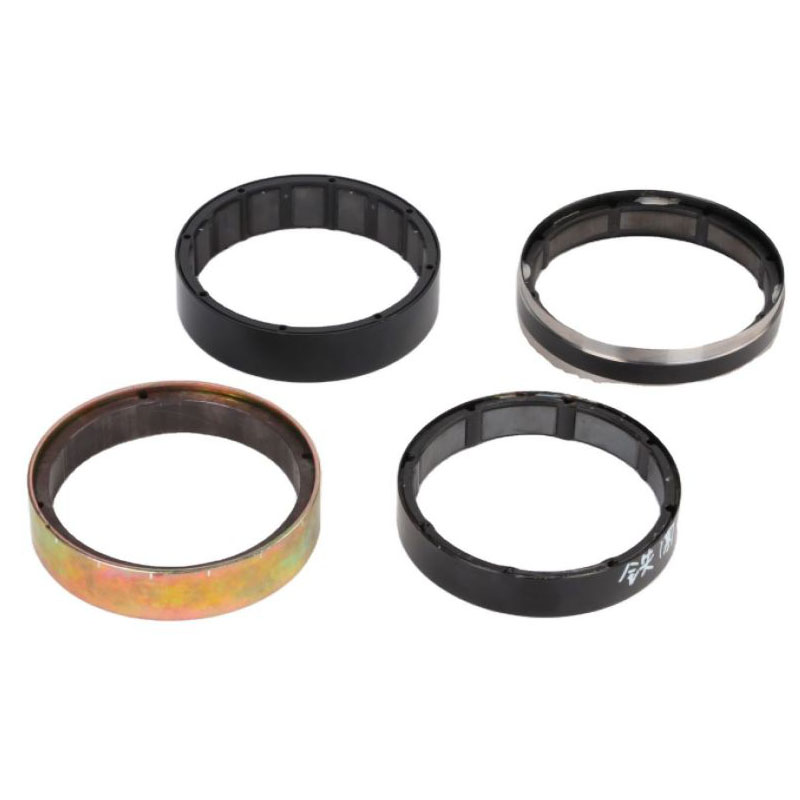
Magnetic ring magnets use a toroidal architecture that delivers uniform magnetic distribution, allowing these components to maintain consistent magnetic fields even during high-speed rotation. This leads to lower cogging torque, smoother motion, and enhanced signal accuracy in measurement systems.
The following table summarizes typical parameters used by industrial buyers, engineers, and procurement teams when evaluating magnetic ring magnets for technical integration:
| Parameter | Description |
|---|---|
| Material Options | NdFeB (Neodymium), SmCo (Samarium Cobalt), Ferrite, AlNiCo |
| Grade Range | N35–N52 (NdFeB), SmCo 5/17 series, Ferrite Y30/Y35 |
| Magnetization Direction | Axial, radial, multi-pole radial, multi-pole segmented |
| Working Temperature | 80°C–350°C depending on material grade |
| Corrosion Protection | Nickel, epoxy, phosphate, or passivation coatings |
| Dimensional Tolerance | ±0.03–0.05 mm for precision industrial applications |
| Inner/Outer Diameter | Fully customizable for motor and sensor applications |
| Magnetic Flux Density | Tailored to torque, holding force, or sensing requirements |
| Mechanical Strength | Enhanced through sintering, bonding, or coating reinforcement |
These parameters ensure compatibility with high-speed motors, robotic arms, precision encoders, and electronic control systems requiring highly stable magnetic output.
In rotary systems, magnetic ring magnets are crucial because they offer:
Lower cogging torque, enabling smoother motion and reduced noise.
Higher flux density, improving power output without increasing motor size.
Better heat resistance, preventing demagnetization during heavy load operations.
Stable performance, ensuring precise speed and torque control.
These characteristics allow magnetic ring magnets to outperform traditional block or arc magnets in systems where rotational symmetry and energy stability are key.
In encoder discs, magnetic rings are often magnetized into multi-pole configurations, enabling:
Accurate position feedback for robotics and automation.
Consistent magnetic field detection in Hall-effect and magneto-resistive sensors.
Improved signal clarity, essential for medical imaging and laboratory instruments.
The magnet’s geometry provides a continuous reference field, significantly reducing signal error caused by vibration or external interference.
Energy optimization is achieved through:
Efficient flux pathways
Reduced mechanical resistance
High magnetic coercivity
Improved thermal stability
This allows industries to operate motors and equipment with lower energy consumption, contributing directly to sustainability goals and long-term operational cost reductions.
Cutting-edge developments are pushing magnetic ring magnets into a new performance era:
High-temperature neodymium grades are expanding use in electric vehicles and aerospace systems.
SmCo advancements are increasing long-term corrosion and radiation resistance.
Eco-friendly ferrite magnets are reducing reliance on rare-earth elements.
Bonded magnetic rings are improving flexibility and complex pole-pattern design for compact motors.
Future improvements are expected to deliver higher magnetic energy while lowering material consumption.
As manufacturing technology evolves, ring magnets benefit from:
Laser-guided machining for improved dimensional tolerance
Automated magnetization equipment for custom radial multi-pole patterns
Multi-segment lamination for improved electromagnetic performance
Advanced coating technology for extreme-environment protection
These upgrades enable systems to become smaller, faster, more efficient, and more reliable.
Key industries pushing growth include:
Electric vehicles requiring compact and efficient high-speed motors
Robotics and automation demanding accurate encoder magnet rings
Medical equipment relying on consistent signal stability
Renewable energy systems employing optimized permanent magnets for turbines
Consumer electronics integrating miniature precision motors
As sustainability and energy efficiency remain global priorities, magnetic ring magnets are positioned as a core technology supporting next-generation machinery and devices.
Q1: How to choose the correct material for a magnetic ring magnet?
A1: Material selection depends on the required temperature resistance, magnetic strength, corrosion tolerance, and environmental conditions. NdFeB provides the strongest magnetic energy for motors and sensors but needs protective coating in humid environments. SmCo is ideal for extreme temperatures and corrosive or vacuum conditions. Ferrite is suitable for cost-sensitive projects and appliances that do not require high magnetic force.
Q2: How to determine the magnetization pattern for my application?
A2: Axial magnetization is used for holding and attracting functions, while radial or multi-pole patterns are used for motors, encoders, and rotational sensors. Multi-pole radial magnetization ensures smooth rotational fields and precise signal formation. Engineers typically define the number of poles based on the motor’s speed, torque, and control requirements.
Strict inspection steps ensure reliable long-term performance, including:
Dimensional testing through automated metrology systems
Flux density verification
Coating adhesion assessment
High-temperature stability simulation
Mechanical stress evaluation
These steps are essential for ensuring that magnets maintain stable performance throughout extended operation cycles.
South Magnet Technology develops industrial-grade magnetic ring magnets engineered with advanced sintering, precision machining, and automated magnetization processes. The company’s capabilities include custom multi-pole radial magnetization, high-temperature material development, and tailor-made dimensions for motors, robotics, sensors, and automation equipment. With a strong focus on reliability, durability, and magnetic stability, the brand supports global industries seeking top-tier magnetic solutions for both current and next-generation technologies.
For project inquiries, customized specifications, or technical consultation, contact us to explore high-performance magnetic ring magnet selections built for demanding industrial environments.


